- Exercise 2 Endocrine Disorders Can Often Be Difficult To Diagnose Because Many Can Present Very Similar Symptoms Diagno 1 (64.44 KiB) Viewed 36 times
- Exercise 2 Endocrine Disorders Can Often Be Difficult To Diagnose Because Many Can Present Very Similar Symptoms Diagno 2 (20.3 KiB) Viewed 36 times
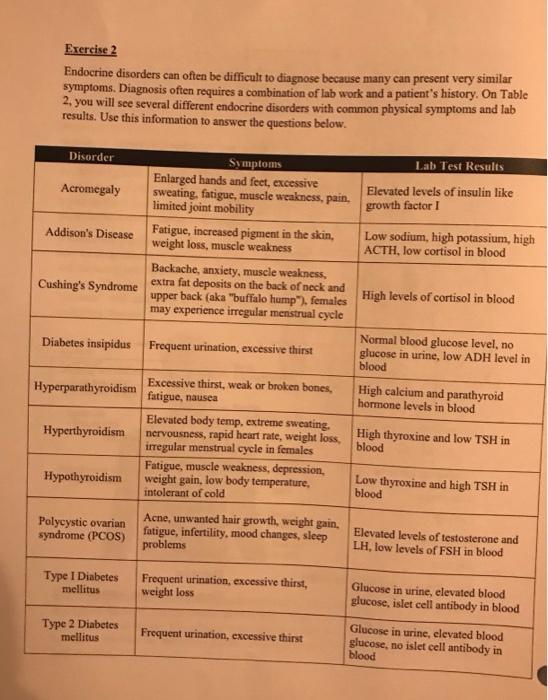
Exercise 2 Endocrine disorders can often be difficult to diagnose because many can present very similar symptoms. Diagnosis often requires a combination of lab work and a patient's history. On Table 2, you will see several different endocrine disorders with common physical symptoms and lab results. Use this information to answer the questions below. Disorder Symptoms Lab Test Results Acromegaly Enlarged hands and feet, excessive sweating, fatigue, muscle weakness, pain, limited joint mobility Elevated levels of insulin like growth factor I Addison's Disease Fatigue, increased pigment in the skin, weight loss, muscle weakness Low sodium, high potassium, high ACTH, low cortisol in blood Backache, anxiety, muscle weakness, extra fat deposits on the back of neck and Cushing's Syndrome upper back (aka "buffalo hump"), females High levels of cortisol in blood may experience irregular menstrual cycle Diabetes insipidus Frequent urination, excessive thirst Normal blood glucose level, no glucose in urine, low ADH level in blood Hyperparathyroidism Excessive thirst, weak or broken bones, fatigue, nausea High calcium and parathyroid hormone levels in blood Hyperthyroidism High thyroxine and low TSH in blood Elevated body temp, extreme sweating, nervousness, rapid heart rate, weight loss, irregular menstrual cycle in females Fatigue, muscle weakness, depression, weight gain, low body temperature, intolerant of cold Hypothyroidism Low thyroxine and high TSH in blood Polycystic ovarian syndrome (PCOS) Acne, unwanted hair growth, weight gain, fatigue, infertility, mood changes, sleep problems Elevated levels of testosterone and LH, low levels of FSH in blood Type I Diabetes mellitus Frequent urination, excessive thirst, weight loss Glucose in urine, elevated blood glucose, islet cell antibody in blood Type 2 Diabetes mellitus Frequent urination, excessive thirst Glucose in urine, elevated blood glucose, no islet cell antibody in blood
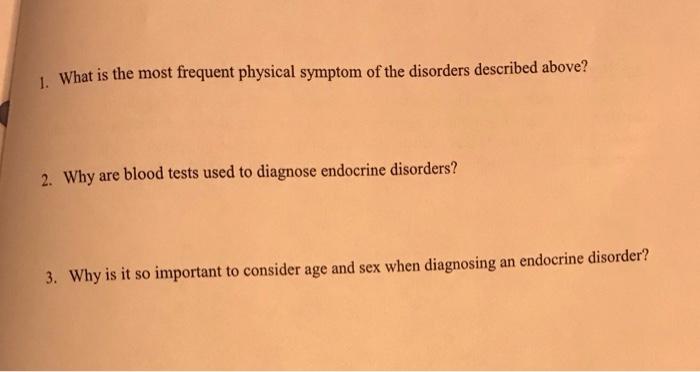
1. What is the most frequent physical symptom of the disorders described above? 2. Why are blood tests used to diagnose endocrine disorders? 3. Why is it so important to consider age and sex when diagnosing an endocrine disorder?