Page 1 of 1
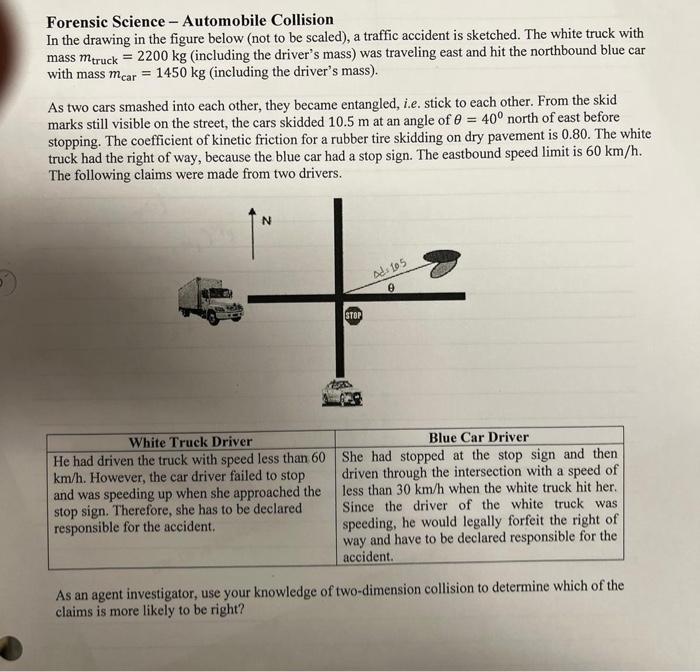
Forensic Science - Automobile Collision In the drawing in the figure below (not to be scaled), a traffic accident is ske
Posted: Thu Apr 28, 2022 9:23 am
by answerhappygod
- Forensic Science Automobile Collision In The Drawing In The Figure Below Not To Be Scaled A Traffic Accident Is Ske 1 (73.71 KiB) Viewed 30 times
Forensic Science - Automobile Collision In the drawing in the figure below (not to be scaled), a traffic accident is sketched. The white truck with mass mtruck = 2200 kg (including the driver's mass) was traveling east and hit the northbound blue car with mass mcar = 1450 kg (including the driver's mass). As two cars smashed into each other, they became entangled, i.e. stick to each other. From the skid marks still visible on the street, the cars skidded 10.5 m at an angle of @ = 40° north of east before stopping. The coefficient of kinetic friction for a rubber tire skidding on dry pavement is 0.80. The white truck had the right of way, because the blue car had a stop sign. The eastbound speed limit is 60 km/h. The following claims were made from two drivers. 'N od: 105 STOP White Truck Driver Blue Car Driver He had driven the truck with speed less than 60 She had stopped at the stop sign and then km/h. However, the car driver failed to stop driven through the intersection with a speed of and was speeding up when she approached the less than 30 km/h when the white truck hit her. stop sign. Therefore, she has to be declared Since the driver of the white truck was responsible for the accident. speeding, he would legally forfeit the right of way and have to be declared responsible for the accident. As an agent investigator, use your knowledge of two-dimension collision to determine which of the claims is more likely to be right?