Page 1 of 1
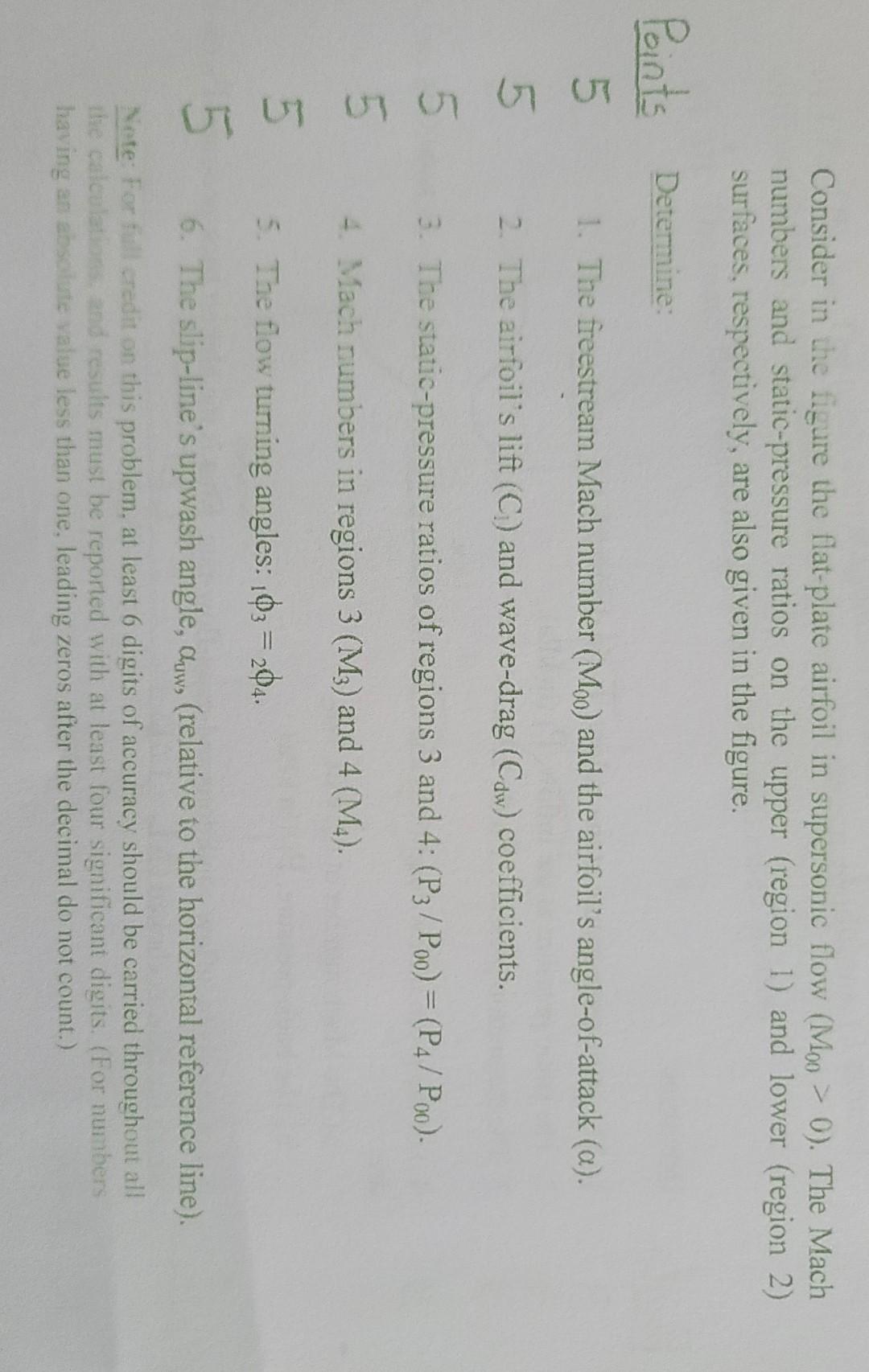
Consider in the figure the flat-plate airfoil in supersonic flow (Moo > 0). The Mach numbers and static-pressure ratios
Posted: Wed Apr 27, 2022 7:45 pm
by answerhappygod
- Consider In The Figure The Flat Plate Airfoil In Supersonic Flow Moo 0 The Mach Numbers And Static Pressure Ratios 1 (141.43 KiB) Viewed 17 times
will upvote!
- Consider In The Figure The Flat Plate Airfoil In Supersonic Flow Moo 0 The Mach Numbers And Static Pressure Ratios 2 (103.45 KiB) Viewed 17 times
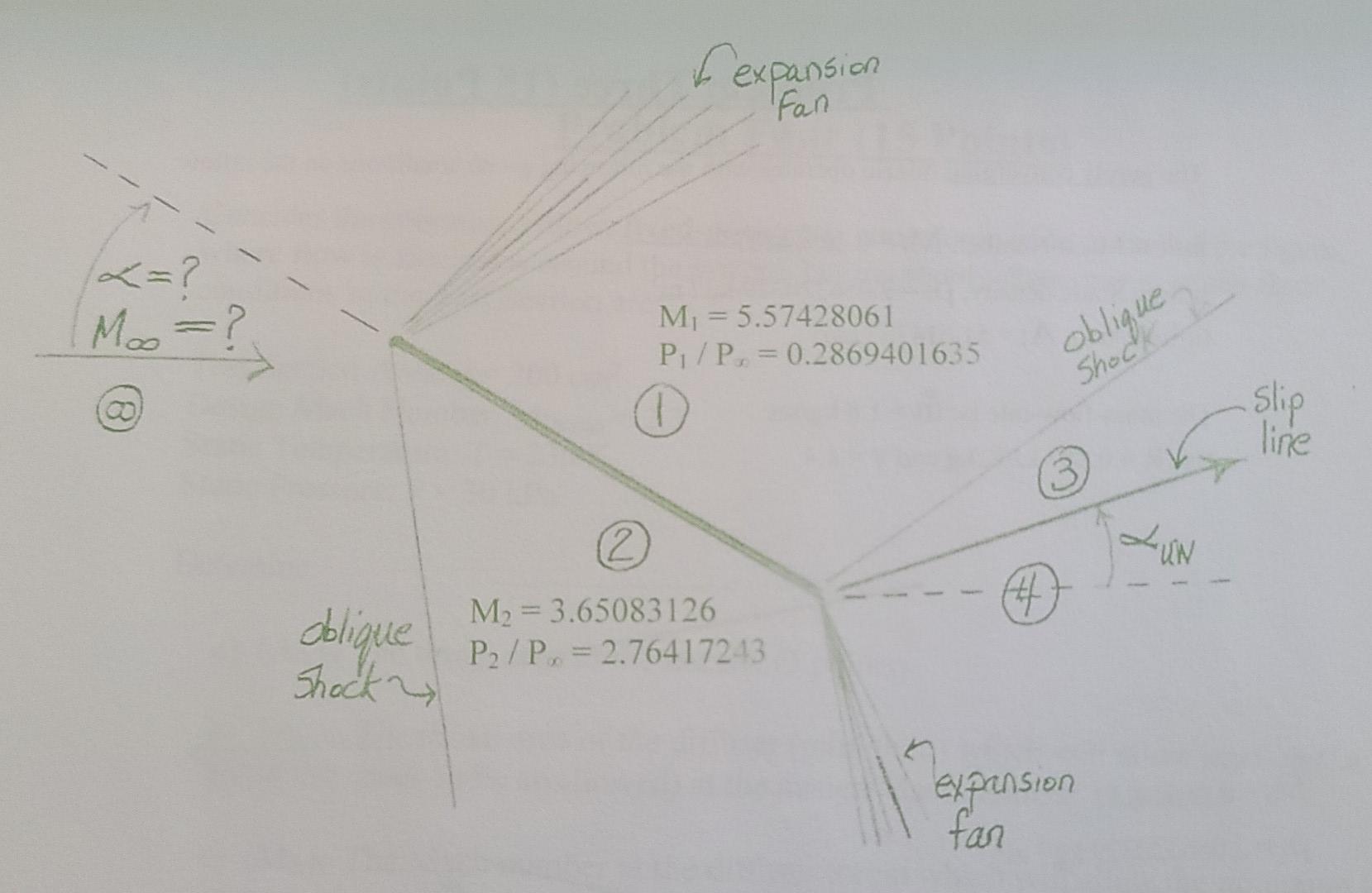
Consider in the figure the flat-plate airfoil in supersonic flow (Moo > 0). The Mach numbers and static-pressure ratios on the upper (region 1) and lower (region 2) surfaces, respectively, are also given in the figure. Points Determine 1. The freestream Mach number (Moo) and the airfoil's angle-of-attack (a). 5 2. The airfoil's lift (C) and wave-drag (Cdw) coefficients. 3. The static-pressure ratios of regions 3 and 4: (P3/P00) = (P4/P00). ur er 6 ur 4. Mach numbers in regions 3 (M3) and 4 (M2). 5 5. The flow turning angles: 103 = 204. 5 6. The slip-line's upwash angle, duw, (relative to the horizontal reference line). Note: For full credit on this problem, at least 6 digits of accuracy should be carried throughout all the calculation and results must be reported with at least four significant digits. (For numbers having an absolute value less than one, leading zeros after the decimal do not count.)
rexpansion 'Fan K=? Mo ? M = 5.57428061 P/P = 0.2869401635 oblique Shoc 0 Slip line 3 (2 LUN 바 oblique Shock 2 M2 = 3.65083126 P/P = 2.76417213 expension fan