Page 1 of 1
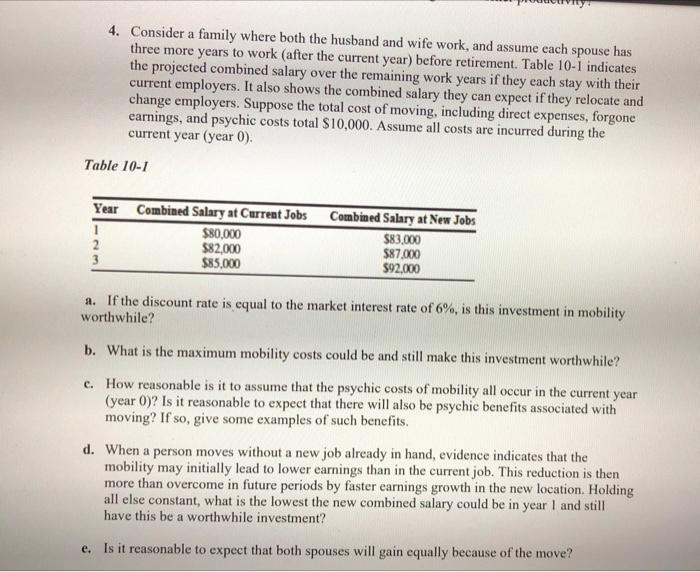
4. Consider a family where both the husband and wife work, and assume each spouse has three more years to work (after th
Posted: Wed Apr 27, 2022 11:52 am
by answerhappygod
- 4 Consider A Family Where Both The Husband And Wife Work And Assume Each Spouse Has Three More Years To Work After Th 1 (66.93 KiB) Viewed 35 times
4. Consider a family where both the husband and wife work, and assume each spouse has three more years to work (after the current year) before retirement. Table 10-1 indicates the projected combined salary over the remaining work years if they each stay with their current employers. It also shows the combined salary they can expect if they relocate and change employers. Suppose the total cost of moving, including direct expenses, forgone earnings, and psychic costs total $10,000. Assume all costs are incurred during the current year (year 0). Table 10-1 Year Combined Salary at Current Jobs $80,000 2 $82,000 3 $85,000 Combined Salary at New Jobs $83.000 $87.000 $92,000 a. If the discount rate is equal to the market interest rate of 6%, is this investment in mobility worthwhile? b. What is the maximum mobility costs could be and still make this investment worthwhile? c. How reasonable is it to assume that the psychic costs of mobility all occur in the current year (year 0)? Is it reasonable to expect that there will also be psychic benefits associated with moving? If so, give some examples of such benefits. d. When a person moves without a new job already in hand, evidence indicates that the mobility may initially lead to lower earnings than in the current job. This reduction is then more than overcome in future periods by faster earnings growth in the new location. Holding all else constant, what is the lowest the new combined salary could be in year I and still have this be a worthwhile investment? e. Is it reasonable to expect that both spouses will gain equally because of the move?