Page 1 of 1
INSTRUCTIONS: Put your full name on the scantron. Indicate test 3 in the TESTNO. box. 1. Which of the following is NOT c
Posted: Fri Jul 15, 2022 5:19 pm
by answerhappygod
- Instructions Put Your Full Name On The Scantron Indicate Test 3 In The Testno Box 1 Which Of The Following Is Not C 1 (70.25 KiB) Viewed 50 times
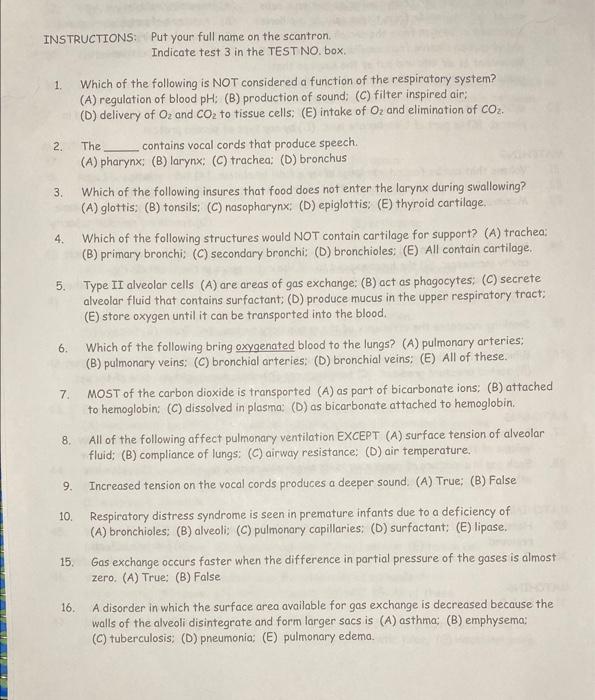
INSTRUCTIONS: Put your full name on the scantron. Indicate test 3 in the TESTNO. box. 1. Which of the following is NOT considered a function of the respiratory system? (A) regulation of blood pH : (B) production of sound; (C) filter inspired air: (D) delivery of O2 and CO2 to tissue cells: (E) intake of O2 and elimination of CO2. 2. The contains vocal cords that produce speech. (A) pharynx: (B) larynx: (C) trachea: (D) bronchus 3. Which of the following insures that food does not enter the larynx during swallowing? (A) glottis: (B) tonsils; (C) nasopharynx; (D) epiglottis: (E) thyroid cartilage. 4. Which of the following structures would NOT contain cartilage for support? (A) trachea: (B) primary bronchi; (C) secondary bronchi; (D) bronchioles: (E) All contain cartilage. 5. Type II alveolar cells (A) are areas of gas exchange: (B) act as phagocytes; (C) secrete alveolar fluid that contains surfactant; (D) produce mucus in the upper respiratory tract: (E) store oxygen until it can be transported into the blood. 6. Which of the following bring oxygenated blood to the lungs? (A) pulmonary arteries: (B) pulmonary veins; (C) bronchial arteries; (D) bronchial veins; (E) All of these. 7. MOST of the carbon dioxide is transported (A) as part of bicarbonate ions: (B) attached to hemoglobin; (C) dissolved in plasma: (D) as bicarbonate attached to hemoglobin. 8. All of the following affect pulmonary ventilation EXCEPT (A) surface tension of alveolar fluid: (B) compliance of lungs: (C) airway resistance: (D) air temperature. 9. Increased tension on the vocal cords produces a deeper sound. (A) True; (B) False 10. Respiratory distress syndrome is seen in premature infants due to a deficiency of (A) bronchioles: (B) alveoli; (C) pulmonary capillaries; (D) surfactant: (E) lipase. 15. Gas exchange occurs faster when the difference in partial pressure of the goses is almost zero. (A) True; (B) False 16. A disorder in which the surface area available for gas exchange is decreased because the walls of the alveoli disintegrate and form larger sacs is (A) asthma; (B) emphysema: (C) tuberculosis; (D) pneumonia; (E) pulmonary edema.