Page 1 of 1
(b) The antenna of a radio receiver gets a signal to noise ratio (S/N) of 80 dB into its 502 input impedance. The signal
Posted: Tue Apr 26, 2022 2:53 pm
by answerhappygod
- B The Antenna Of A Radio Receiver Gets A Signal To Noise Ratio S N Of 80 Db Into Its 502 Input Impedance The Signal 1 (36.58 KiB) Viewed 44 times
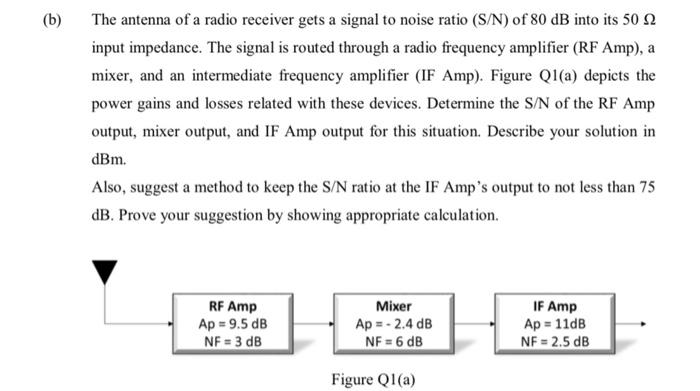
(b) The antenna of a radio receiver gets a signal to noise ratio (S/N) of 80 dB into its 502 input impedance. The signal is routed through a radio frequency amplifier (RF Amp), a mixer, and an intermediate frequency amplifier (IF Amp). Figure Q1(a) depicts the power gains and losses related with these devices. Determine the S/N of the RF Amp output, mixer output, and IF Amp output for this situation. Describe your solution in dBm. Also, suggest a method to keep the S/N ratio at the IF Amp's output to not less than 75 dB. Prove your suggestion by showing appropriate calculation. RF Amp Ap = 9.5 dB NF = 3 dB Mixer Ap = -2.4 dB NF = 6 dB IF Amp Ap = 11dB NF = 2.5 dB Figure Q1(a)