- 0 9 3 1 3 2 D Consider Table 3 As Given Table 3 Characterization Of Solid Waste Worldwide Wet Weight Unep 2016 1 (75.63 KiB) Viewed 43 times
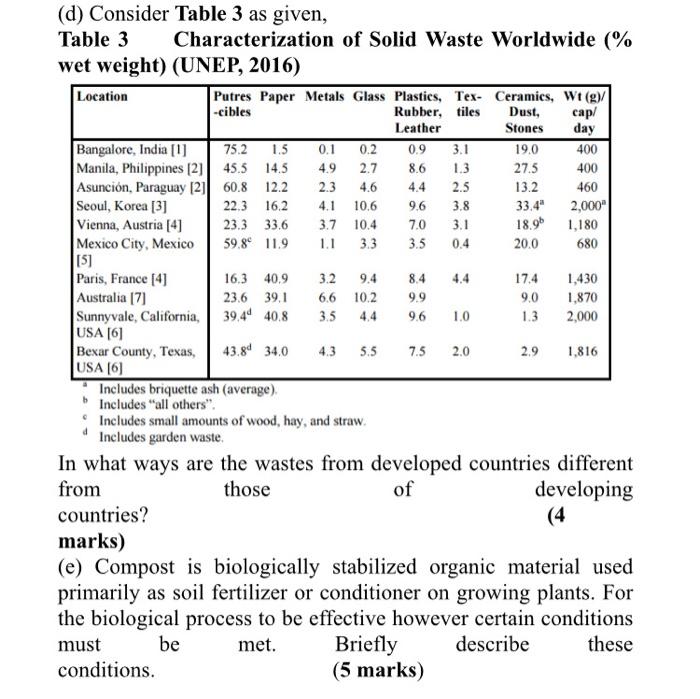
0.9 3.1 3.2 (d) Consider Table 3 as given, Table 3 Characterization of Solid Waste Worldwide (% wet weight) (UNEP, 2016) Location Putres Paper Metals Glass Plastics, Tex- Ceramics, Wt (g) -cibles Rubber, tiles Dust, cap/ Leather Stones day Bangalore, India (1) 75.2 1.5 0.1 0.2 3.1 19.0 400 Manila, Philippines (2) 45.5 14.5 4.9 2.7 8.6 1.3 27.5 400 Asunción, Paraguay (2) 60.8 12.2 2.3 4.6 4.4 2.5 13.2 460 Seoul, Korea [3] 22.3 16,2 4.1 10.6 9.6 3.8 33.4" 2,000" Vienna, Austria (4) 23.3 33.6 3.7 10.4 7.0 18.90 1,180 Mexico City, Mexico 59.8° 11.9 3.3 3.5 0.4 20.0 680 [5] Paris, France (4) 16.3 40,9 9.4 8.4 4.4 17.4 1,430 Australia 17) 23.6 39,1 6.6 10.2 9.9 9.0 1,870 Sunnyvale, California, 39.44 40,8 3.5 4.4 9.6 1.0 1.3 2,000 USA [6] Bexar County, Texas, 43.84 34.0 4.3 5.5 7.5 1.816 USA [6] Includes briquette ash (average) Includes all others" Includes small amounts of wood, hay, and straw. Includes garden waste In what ways are the wastes from developed countries different from those of developing countries? marks) (e) Compost is biologically stabilized organic material used primarily as soil fertilizer or conditioner on growing plants. For the biological process to be effective however certain conditions must be met. Briefly describe these conditions. (5 marks) 2.0 2.9 b d