Page 1 of 1
Environmental Risks in Water Engineering 1. In a wastewater treatment plant, wastewater samples were collected at the he
Posted: Tue Apr 26, 2022 1:13 pm
by answerhappygod
- Environmental Risks In Water Engineering 1 In A Wastewater Treatment Plant Wastewater Samples Were Collected At The He 1 (289.28 KiB) Viewed 43 times
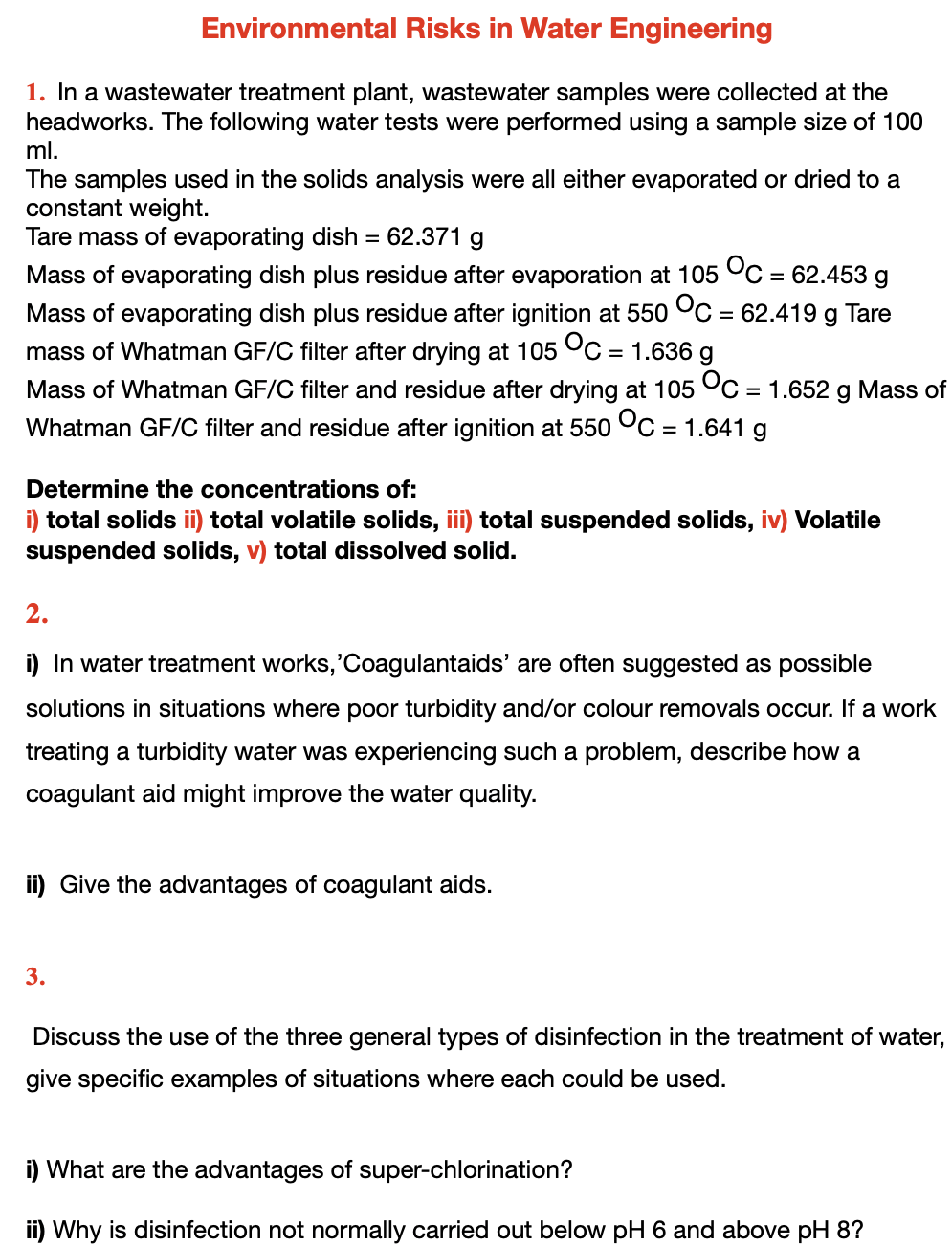
Environmental Risks in Water Engineering 1. In a wastewater treatment plant, wastewater samples were collected at the headworks. The following water tests were performed using a sample size of 100 ml. The samples used in the solids analysis were all either evaporated or dried to a constant weight. Tare mass of evaporating dish = 62.371 g Mass of evaporating dish plus residue after evaporation at 105 °C = 62.453 g Mass of evaporating dish plus residue after ignition at 550 °C = 62.419 g Tare mass of Whatman GF/C filter after drying at 105 °C = 1.636 g Mass of Whatman GF/C filter and residue after drying at 105 °C = 1.652 g Mass of Whatman GF/C filter and residue after ignition at 550 °C = 1.641 g = = = Determine the concentrations of: i) total solids ii) total volatile solids, iii) total suspended solids, iv) Volatile suspended solids, v) total dissolved solid. 2. i) In water treatment works,'Coagulantaids' are often suggested as possible solutions in situations where poor turbidity and/or colour removals occur. If a work treating a turbidity water was experiencing such a problem, describe how a coagulant aid might improve the water quality. ii) Give the advantages of coagulant aids. 3. Discuss the use of the three general types of disinfection in the treatment of water, give specific examples of situations where each could be used. i) What are the advantages of super-chlorination? ii) Why is disinfection not normally carried out below pH 6 and above pH 8?