Page 1 of 1
STRATEGY CAPSULE 9.1 How the Returns on Innovation are Shared The value created by an innovation is distributed among a
Posted: Tue Apr 26, 2022 12:49 pm
by answerhappygod
- Strategy Capsule 9 1 How The Returns On Innovation Are Shared The Value Created By An Innovation Is Distributed Among A 1 (363.11 KiB) Viewed 39 times
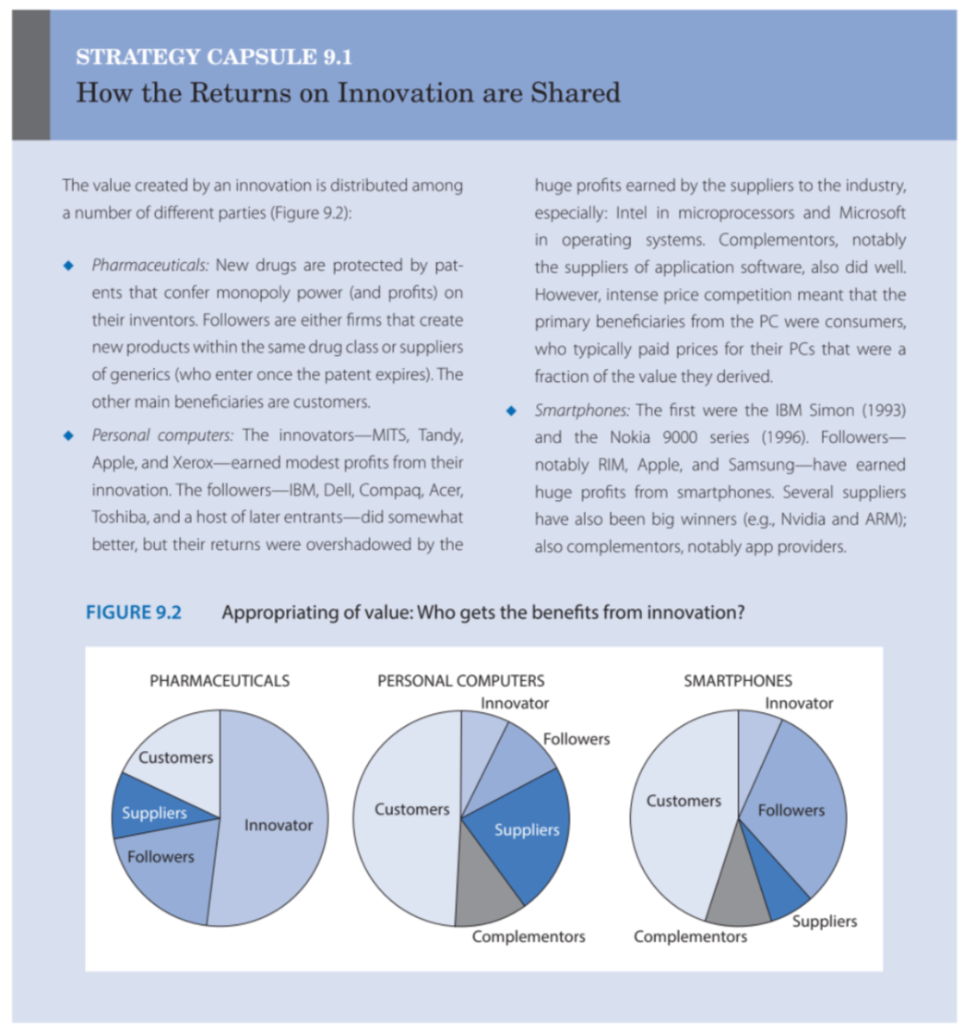
STRATEGY CAPSULE 9.1 How the Returns on Innovation are Shared The value created by an innovation is distributed among a number of different parties (Figure 9.2): • Pharmaceuticals: New drugs are protected by pat- ents that confer monopoly power (and profits) on their inventors. Followers are either firms that create new products within the same drug class or suppliers of generics (who enter once the patent expires). The other main beneficiaries are customers. • Personal computers: The innovators-MITS, Tandy, Apple, and Xerox-earned modest profits from their innovation. The followers—IBM, Dell, Compaq, Acer, Toshiba, and a host of later entrants-did somewhat better, but their returns were overshadowed by the huge profits earned by the suppliers to the industry, especially: Intel in microprocessors and Microsoft in operating systems. Complementors, notably the suppliers of application software, also did well. However, intense price competition meant that the primary beneficiaries from the PC were consumers, who typically paid prices for their PCs that were a fraction of the value they derived. • Smartphones: The first were the IBM Simon (1993) and the Nokia 9000 series (1996). Followers, notably RIM, Apple, and Samsung-have earned huge profits from smartphones. Several suppliers have also been big winners (e.g., Nvidia and ARM); also complementors, notably app providers. FIGURE 9.2 Appropriating of value: Who gets the benefits from innovation? PHARMACEUTICALS PERSONAL COMPUTERS Innovator SMARTPHONES Innovator Followers Customers Customers Suppliers Customers Followers Innovator Suppliers Followers Suppliers Complementors Complementors