Page 1 of 1
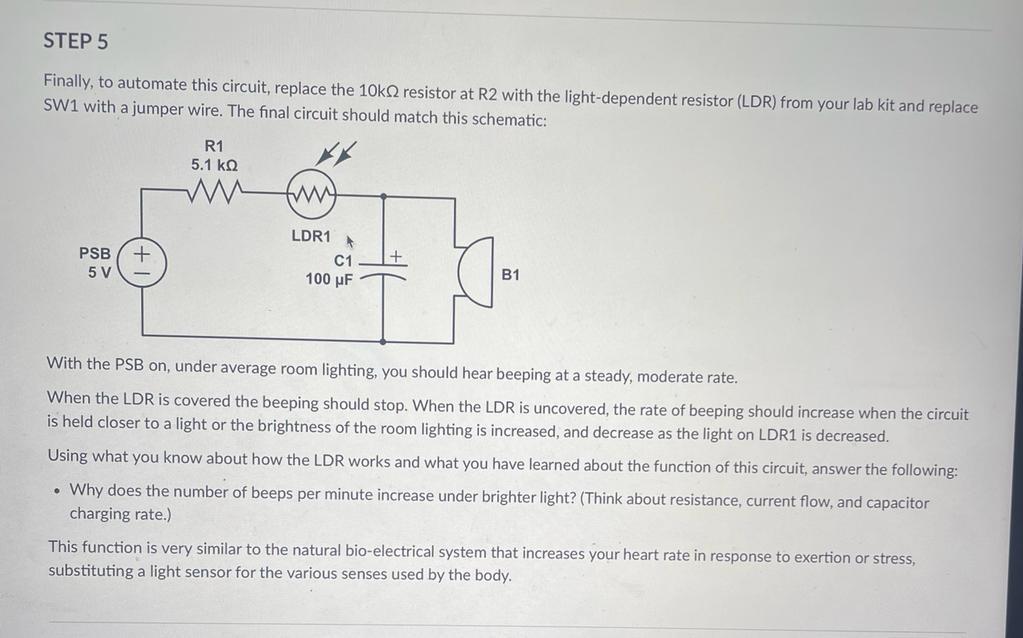
STEP 5 Finally, to automate this circuit, replace the 10k2 resistor at R2 with the light-dependent resistor (LDR) from y
Posted: Tue Jun 07, 2022 12:46 pm
by answerhappygod
- Step 5 Finally To Automate This Circuit Replace The 10k2 Resistor At R2 With The Light Dependent Resistor Ldr From Y 1 (73.18 KiB) Viewed 35 times
STEP 5 Finally, to automate this circuit, replace the 10k2 resistor at R2 with the light-dependent resistor (LDR) from your lab kit and replace SW1 with a jumper wire. The final circuit should match this schematic: R1 5.1 ΚΩ www. LDR1 + C1 PSB + 5 V B1 100 μF With the PSB on, under average room lighting, you should hear beeping at a steady, moderate rate. When the LDR is covered the beeping should stop. When the LDR is uncovered, the rate of beeping should increase when the circuit is held closer to a light or the brightness of the room lighting is increased, and decrease as the light on LDR1 is decreased. Using what you know about how the LDR works and what you have learned about the function of this circuit, answer the following: • Why does the number of beeps per minute increase under brighter light? (Think about resistance, current flow, and capacitor charging rate.) This function is very similar to the natural bio-electrical system that increases your heart rate in response to exertion or stress, substituting a light sensor for the various senses used by the body.