Page 1 of 1
In preparing an in-service about renal disease, the nurse includes which of the following conditions as risk factors for
Posted: Wed May 18, 2022 7:49 pm
by answerhappygod
- In Preparing An In Service About Renal Disease The Nurse Includes Which Of The Following Conditions As Risk Factors For 1 (33.42 KiB) Viewed 41 times
- In Preparing An In Service About Renal Disease The Nurse Includes Which Of The Following Conditions As Risk Factors For 2 (27.86 KiB) Viewed 41 times
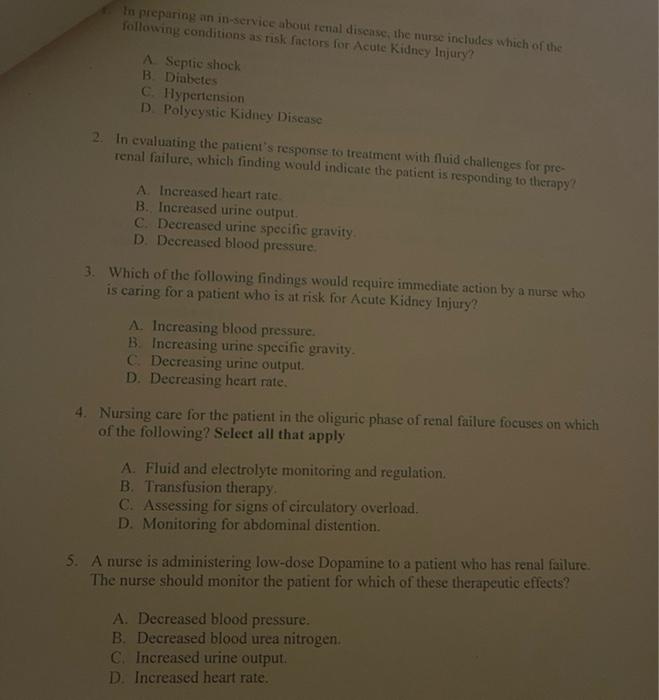
In preparing an in-service about renal disease, the nurse includes which of the following conditions as risk factors for Acute Kidney Injury? A Septic shock B. Diabetes C. Hypertension D. Polycystic Kidney Disease 2. In evaluating the patient's response to treatment with fluid challenges for pre- renal failure, which finding would indicate the patient is responding to therapy? A. Increased heart rate B. Increased urine output. C. Decreased urine specific gravity D. Decreased blood pressure 3. Which of the following findings would require immediate action by a nurse who is caring for a patient who is at risk for Acute Kidney Injury? A. Increasing blood pressure. B. Increasing urine specific gravity. CDecreasing urine output. D. Decreasing heart rate. 4. Nursing care for the patient in the oliguric phase of renal failure focuses on which of the following? Select all that apply A Fluid and electrolyte monitoring and regulation B. Transfusion therapy. C. Assessing for signs of circulatory overload. D. Monitoring for abdominal distention. 5. A nurse is administering low-dose Dopamine to a patient who has renal failure. The nurse should monitor the patient for which of these therapeutic effects? A. Decreased blood pressure. B. Decreased blood urea nitrogen. C Increased urine output. D. Increased heart rate.
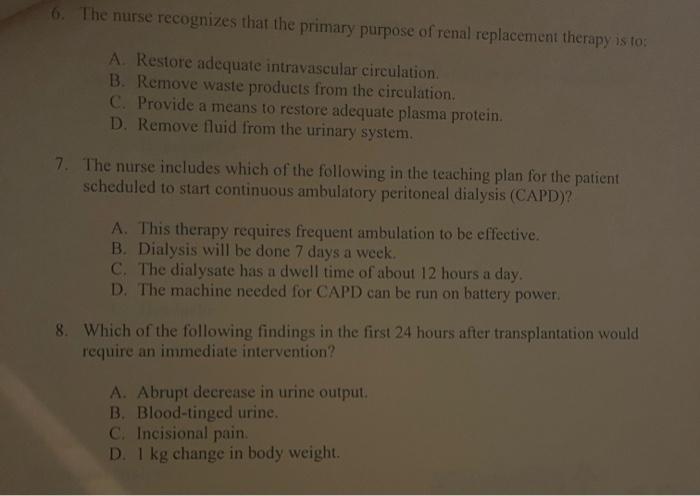
6. The nurse recognizes that the primary purpose of renal replacement therapy is tos A Restore adequate intravascular circulation. B. Remove waste products from the circulation. C. Provide a means to restore adequate plasma protein. D. Remove fluid from the urinary system. 7. The nurse includes which of the following in the teaching plan for the patient scheduled to start continuous ambulatory peritoneal dialysis (CAPD)? A. This therapy requires frequent ambulation to be effective. B. Dialysis will be done 7 days a week. C. The dialysate has a dwell time of about 12 hours a day. D. The machine needed for CAPD can be run on battery power. 8. Which of the following findings in the first 24 hours after transplantation would require an immediate intervention? A. Abrupt decrease in urine output. B. Blood-tinged urine. C. Incisional pain D. I kg change in body weight.