Page 1 of 1
The purpose of this experiment is to study the process of projectile motion projectile from a horizontal launch, and the
Posted: Wed May 18, 2022 8:35 am
by answerhappygod
- The Purpose Of This Experiment Is To Study The Process Of Projectile Motion Projectile From A Horizontal Launch And The 1 (56.02 KiB) Viewed 65 times
- The Purpose Of This Experiment Is To Study The Process Of Projectile Motion Projectile From A Horizontal Launch And The 2 (30.7 KiB) Viewed 65 times
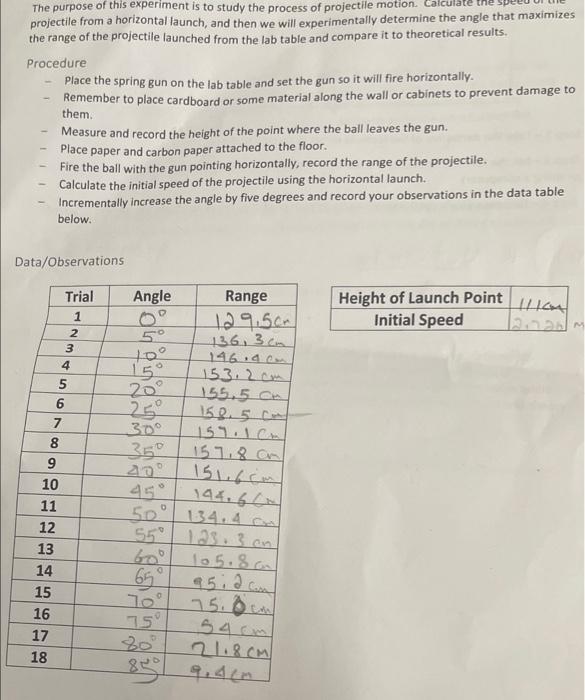
The purpose of this experiment is to study the process of projectile motion projectile from a horizontal launch, and then we will experimentally determine the angle that maximizes the range of the projectile launched from the lab table and compare it to theoretical results, Procedure Place the spring gun on the lab table and set the gun so it will fire horizontally. Remember to place cardboard or some material along the wall or cabinets to prevent damage to them. Measure and record the height of the point where the ball leaves the gun. Place paper and carbon paper attached to the floor. Fire the ball with the gun pointing horizontally, record the range of the projectile. Calculate the initial speed of the projectile using the horizontal launch. Incrementally increase the angle by five degrees and record your observations in the data table below. Data/Observations Height of Launch Point Initial Speed 2.1 Trial 1 2 3 4 5 6 7 8 9 10 11 12 13 14 Angle Range 129.5cm 5° 136,3 cm 146.00 15 153.2cm 20 155.5 cm 25° 152_5 30° 157.1 350 157,8 an 20 151.6cm 45 144.6cm 50° 134.4 cm 55° 123. 3 en 105.80 659 asidan 15 المهدد 15 16 17 18 54cm 21.8cm 80
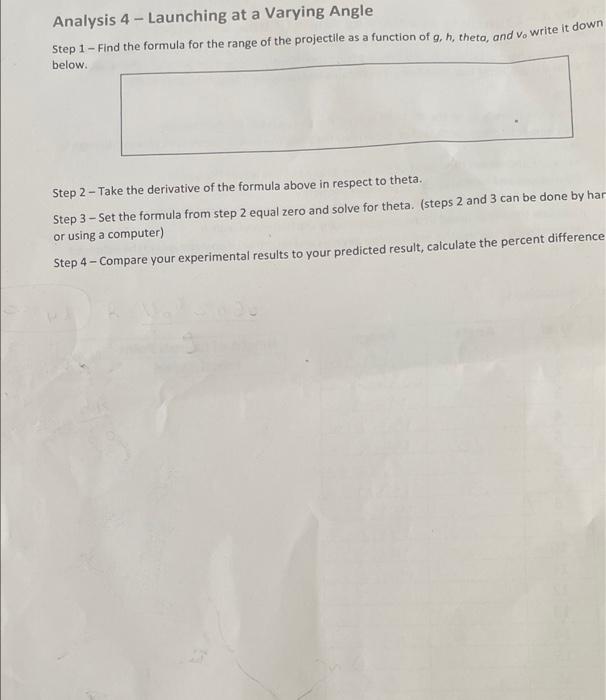
Analysis 4 - Launching at a Varying Angle Step 1 - Find the formula for the range of the projectile as a function of g, h, theto, and to write it down below. Step 2 - Take the derivative of the formula above in respect to theta. Step 3 - Set the formula from step 2 equal zero and solve for theta (steps 2 and 3 can be done by har or using a computer) Step 4 - Compare your experimental results to your predicted result, calculate the percent difference