Page 1 of 1
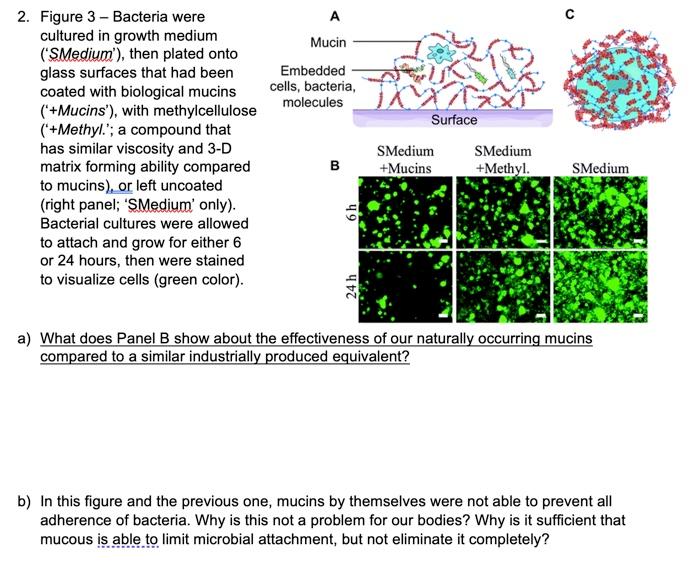
A Mucin Embedded cells, bacteria, molecules Surface 2. Figure 3 - Bacteria were cultured in growth medium (SMedium'), th
Posted: Tue May 17, 2022 6:26 pm
by answerhappygod
- A Mucin Embedded Cells Bacteria Molecules Surface 2 Figure 3 Bacteria Were Cultured In Growth Medium Smedium Th 1 (81.26 KiB) Viewed 139 times
A Mucin Embedded cells, bacteria, molecules Surface 2. Figure 3 - Bacteria were cultured in growth medium (SMedium'), then plated onto glass surfaces that had been coated with biological mucins ('+Mucins"), with methylcellulose (+Methyl.'; a compound that has similar viscosity and 3-D matrix forming ability compared to mucins), or left uncoated (right panel; 'SMedium' only). Bacterial cultures were allowed to attach and grow for either 6 or 24 hours, then were stained to visualize cells (green color). B SMedium +Mucins SMedium +Methyl SMedium 24h a) What does Panel B show about the effectiveness of our naturally occurring mucins compared to a similar industrially produced equivalent? b) In this figure and the previous one, mucins by themselves were not able to prevent all adherence of bacteria. Why is this not a problem for our bodies? Why is it sufficient that mucous is able to limit microbial attachment, but not eliminate it completely?