Page 1 of 1
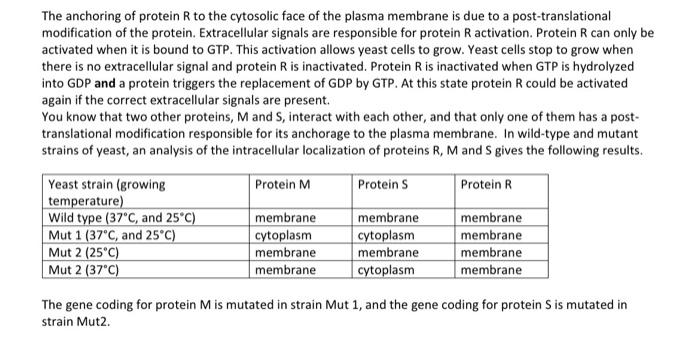
The anchoring of protein R to the cytosolic face of the plasma membrane is due to a post-translational modification of t
Posted: Tue May 17, 2022 2:33 pm
by answerhappygod
- The Anchoring Of Protein R To The Cytosolic Face Of The Plasma Membrane Is Due To A Post Translational Modification Of T 1 (54.59 KiB) Viewed 152 times
- The Anchoring Of Protein R To The Cytosolic Face Of The Plasma Membrane Is Due To A Post Translational Modification Of T 2 (32.28 KiB) Viewed 152 times
The anchoring of protein R to the cytosolic face of the plasma membrane is due to a post-translational modification of the protein. Extracellular signals are responsible for protein R activation. Protein R can only be activated when it is bound to GTP. This activation allows yeast cells to grow. Yeast cells stop to grow when there is no extracellular signal and protein Ris inactivated. Protein Ris inactivated when GTP is hydrolyzed into GDP and a protein triggers the replacement of GDP by GTP. At this state protein R could be activated again if the correct extracellular signals are present. You know that two other proteins, M and S, interact with each other, and that only one of them has a post- translational modification responsible for its anchorage to the plasma membrane. In wild-type and mutant strains of yeast, an analysis of the intracellular localization of proteins R, M and S gives the following results. Yeast strain (growing Protein M Proteins Protein R temperature) Wild type (37°C, and 25°C) membrane membrane membrane Mut 1 (37°C, and 25°C) cytoplasm cytoplasm membrane Mut 2 (25°C) membrane membrane membrane Mut 2 (37°C) membrane cytoplasm membrane The gene coding for protein M is mutated in strain Mut 1, and the gene coding for protein Sis mutated in strain Mut2.
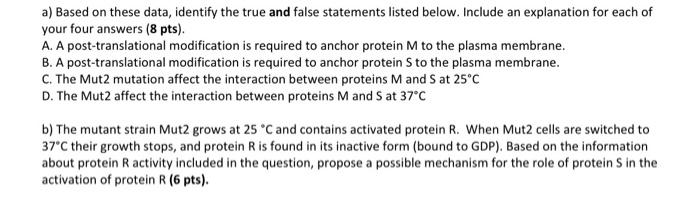
a) Based on these data, identify the true and false statements listed below. Include an explanation for each of your four answers (8 pts). A. A post-translational modification is required to anchor protein M to the plasma membrane. B. A post-translational modification is required to anchor protein S to the plasma membrane. C. The Mut2 mutation affect the interaction between proteins M and Sat 25°C D. The Mut2 affect the interaction between proteins M and 5 at 37°C b) The mutant strain Mut2 grows at 25 °C and contains activated protein R. When Mut2 cells are switched to 37°C their growth stops, and protein Ris found in its inactive form (bound to GDP). Based on the information about protein activity included in the question, propose a possible mechanism for the role of proteins in the activation of protein R (6 pts).