Page 1 of 1
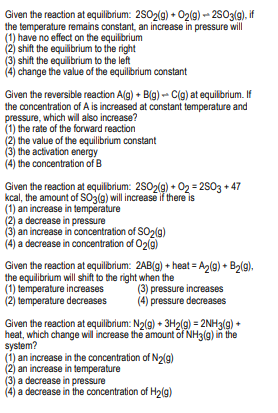
Given the reaction at equilibrium: 28O2(g) + O2(g) - 2503/9), if the temperature remains constant, an increase in pressu
Posted: Tue May 17, 2022 7:49 am
by answerhappygod
- Given The Reaction At Equilibrium 28o2 G O2 G 2503 9 If The Temperature Remains Constant An Increase In Pressu 1 (51.75 KiB) Viewed 52 times
Given the reaction at equilibrium: 28O2(g) + O2(g) - 2503/9), if the temperature remains constant, an increase in pressure will (1) have no effect on the equilibrium (2) shift the equilibrium to the right (3) shift the equilibrium to the left (4) change the value of the equilibrium constant Given the reversible reaction Alg) + B(g) - C(g) at equilibrium. If the concentration of A is increased at constant temperature and pressure, which will also increase? (1) the rate of the forward reaction (2) the value of the equilibrium constant (3) the activation energy (4) the concentration of B Given the reaction at equilibrium: 2502(9) O2 = 2503 +47 kcal, the amount of SO3(g) will increase if there is (1) an increase in temperature (2) a decrease in pressure (3) an increase in concentration of SO2(g) (4) a decrease in concentration of O2(9) Given the reaction at equilibrium: 2AB(g) + heat Az(9) + B2(g) the equilibrium will shift to the right when the (1) temperature increases (3) pressure increases (2) temperature decreases (4) pressure decreases Given the reaction at equilibrium: N2(g) + 3H2(g) = 2NH3(9) heat, which change will increase the amount of NH3(g) in the system? (1) an increase in the concentration of N2(9) (2) an increase in temperature (3) a decrease in pressure (4) a decrease in the concentration of H2(g)