Page 1 of 1
Aniline is produced by the hydrogenation of nitrobenzene. The reaction takes place in a fluidized bed reactor operating
Posted: Mon May 16, 2022 1:42 pm
by answerhappygod
- Aniline Is Produced By The Hydrogenation Of Nitrobenzene The Reaction Takes Place In A Fluidized Bed Reactor Operating 1 (46.83 KiB) Viewed 60 times
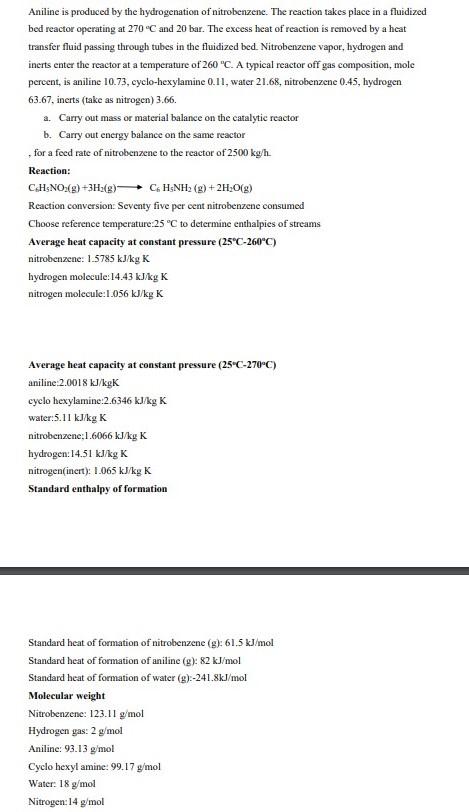
Aniline is produced by the hydrogenation of nitrobenzene. The reaction takes place in a fluidized bed reactor operating at 270 °C and 20 bar. The excess heat of reaction is removed by a heat transfer fluid passing through tubes in the fluidized bed. Nitrobenzene vapor, hydrogen and inerts enter the reactor at a temperature of 260 "C. A typical reactor off gas composition, mole percent, is aniline 10.73, cyclo-hexylamine 0.11, water 21.68, nitrobenzene 0.45, hydrogen 63.67, inerts (take as nitrogen) 3.66. a. Carry out mass or material balance on the catalytic reactor b. Carry out energy balance on the same reactor for a feed rate of nitrobenzene to the reactor of 2500 kg/h Reaction: CHNO() +3H2(g)— C. HșNH2(g) + 2H2O(g) Reaction conversion: Seventy five per cent nitrobenzene consumed Choose reference temperature:25 °C to determine enthalpies of streams Average heat capacity at constant pressure (25°C-260°C) nitrobenzene: 1.5785 kJ/kg K hydrogen molecule:14.43 kJ/kg K nitrogen molecule:1.056 kJ/kg K Average heat capacity at constant pressure (25°C-270°C) aniline:2.0018 kJ/kg cyclohexylamine:2.6346 kJ/kg K water:5.11 kJ/kg K nitrobenzene;1.6066 kJ/kg K hydrogen: 14.51 kJ/kg K nitrogen(inert): 1.065 kJ/kg K Standard enthalpy of formation Standard heat of formation of nitrobenzene (g): 61.5 kJ/mol Standard heat of formation of aniline (g): 82 kJ/mol Standard heat of formation of water (g): -241.8kJ/mol Molecular weight Nitrobenzene: 123.11 g/mol Hydrogen gas: 2 g/mol Aniline: 93.13 g/mol Cyclohexyl amine: 99.17 g/mol Water: 18 g/mol Nitrogen: 14 g/mol