Page 1 of 1
III. Chi Square Goodness of Fit test a) For this application, we will again use male/female data. We will test whether t
Posted: Wed May 11, 2022 2:25 pm
by answerhappygod
- Iii Chi Square Goodness Of Fit Test A For This Application We Will Again Use Male Female Data We Will Test Whether T 1 (49.54 KiB) Viewed 23 times
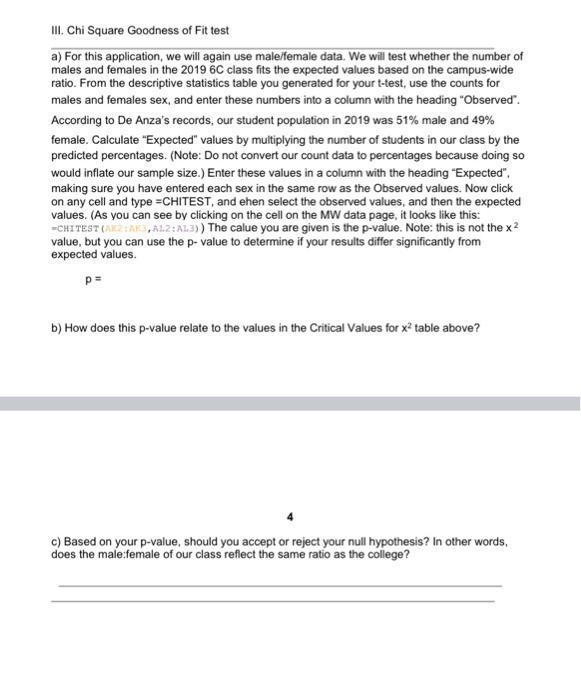
III. Chi Square Goodness of Fit test a) For this application, we will again use male/female data. We will test whether the number of males and females in the 2019 6C class fits the expected values based on the campus-wide ratio. From the descriptive statistics table you generated for your t-test, use the counts for males and females sex, and enter these numbers into a column with the heading "Observed". According to De Anza's records, our student population in 2019 was 51% male and 49% female. Calculate "Expected" values by multiplying the number of students in our class by the predicted percentages. (Note: Do not convert our count data to percentages because doing so would inflate our sample size.) Enter these values in a column with the heading "Expected". making sure you have entered each sex in the same row as the Observed values. Now click on any cell and type=CHITEST, and ehen select the observed values, and then the expected values. (As you can see by clicking on the cell on the MW data page, it looks like this: CHITEST LARA12:113)) The calue you are given is the p-value. Note: this is not the x2 value, but you can use the p-value to determine if your results differ significantly from expected values. p= b) How does this p-value relate to the values in the Critical Values for x2 table above? c) Based on your p-value, should you accept or reject your null hypothesis? In other words, does the male female of our class reflect the same ratio as the college?