Page 1 of 1
18. (8pts) Select the most appropriate approach, from list, to analyze the situations given in the List Regression, ANOV
Posted: Wed May 11, 2022 2:16 pm
by answerhappygod
- 18 8pts Select The Most Appropriate Approach From List To Analyze The Situations Given In The List Regression Anov 1 (90.02 KiB) Viewed 22 times
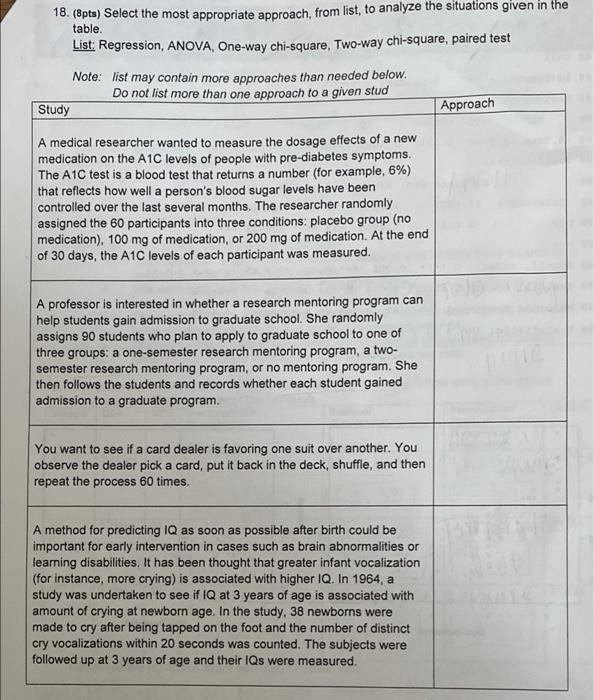
18. (8pts) Select the most appropriate approach, from list, to analyze the situations given in the List Regression, ANOVA, One-way chi-square, Two-way chi-square, paired test table. Note: list may contain more approaches than needed below. Do not list more than one approach to a given stud Study Approach A medical researcher wanted to measure the dosage effects of a new medication on the A1c levels of people with pre-diabetes symptoms. The A1C test is a blood test that returns a number (for example, 6%) that reflects how well a person's blood sugar levels have been controlled over the last several months. The researcher randomly assigned the 60 participants into three conditions: placebo group (no medication), 100 mg of medication, or 200 mg of medication. At the end of 30 days, the A1C levels of each participant was measured. A professor is interested in whether a research mentoring program can help students gain admission to graduate school. She randomly assigns 90 students who plan to apply to graduate school to one of three groups: a one-semester research mentoring program, a two- semester research mentoring program, or no mentoring program. She then follows the students and records whether each student gained admission to a graduate program. You want to see if a card dealer is favoring one suit over another. You observe the dealer pick a card, put it back in the deck, shuffle, and then repeat the process 60 times. A method for predicting IQ as soon as possible after birth could be important for early intervention in cases such as brain abnormalities or learning disabilities. It has been thought that greater infant vocalization (for instance, more crying) is associated with higher IQ. In 1964, a study was undertaken to see if IQ at 3 years of age is associated with amount of crying at newborn age. In the study. 38 newborns were made to cry after being tapped on the foot and the number of distinct cry ions within 20 seconds was counted. The subjects were followed up at 3 years of age and their IQs were measured.