Page 1 of 1
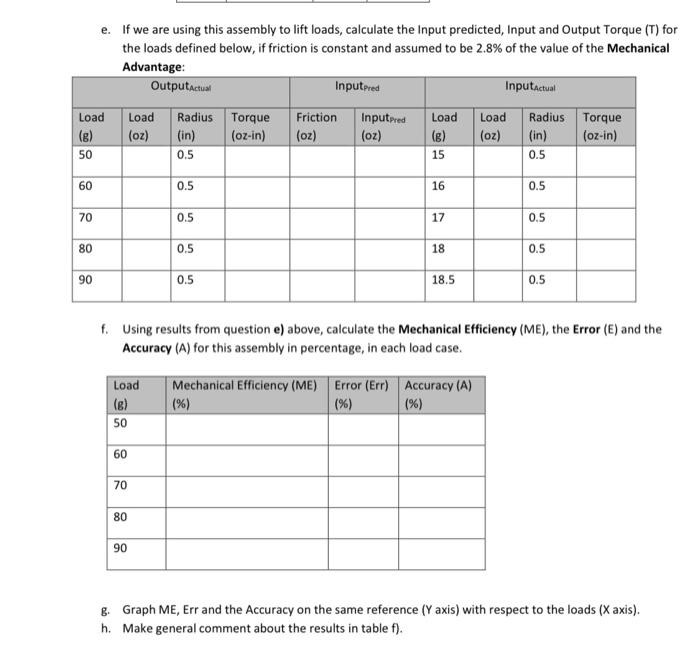
e. If we are using this assembly to lift loads, calculate the Input predicted, Input and Output Torque (T) for the loads
Posted: Mon May 09, 2022 9:47 am
by answerhappygod
- E If We Are Using This Assembly To Lift Loads Calculate The Input Predicted Input And Output Torque T For The Loads 1 (51.86 KiB) Viewed 29 times
e. If we are using this assembly to lift loads, calculate the Input predicted, Input and Output Torque (T) for the loads defined below, if friction is constant and assumed to be 2.8% of the value of the Mechanical Advantage: OutputActual Inputpred InputActual Load Load Radius Torque Friction Inputpred Load Load Radius Torque (oz) (in) (oz-in) (oz) (oz) (p) (oz) (in) (oz-in) 50 0.5 15 0.5 (6) 60 0.5 16 0.5 70 0.5 17 0.5 80 0.5 18 0.5 90 0.5 18.5 0.5 f. Using results from question e) above, calculate the Mechanical Efficiency (ME), the Error (E) and the Accuracy (A) for this assembly in percentage, in each load case. Load (s) 50 Mechanical Efficiency (ME) Error (Err) Accuracy (A) (%) (%) (%) 60 70 80 90 8. Graph ME, Err and the accuracy on the same reference (Yaxis) with respect to the loads (X axis). h. Make general comment about the results in table f).