Page 1 of 1
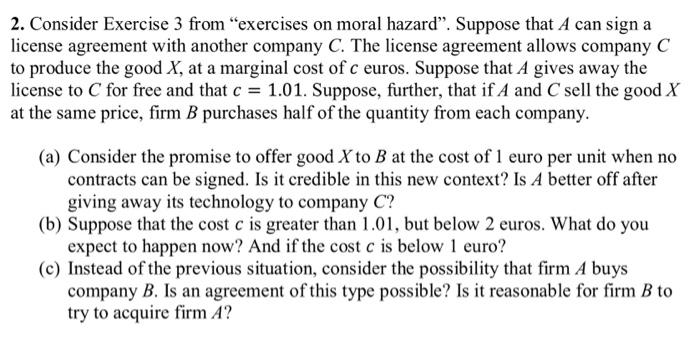
2. Consider Exercise 3 from "exercises on moral hazard”. Suppose that A can sign a license agreement with another compan
Posted: Sun May 08, 2022 9:10 am
by answerhappygod
- 2 Consider Exercise 3 From Exercises On Moral Hazard Suppose That A Can Sign A License Agreement With Another Compan 1 (56.8 KiB) Viewed 33 times
2. Consider Exercise 3 from "exercises on moral hazard”. Suppose that A can sign a license agreement with another company C. The license agreement allows company C to produce the good X, at a marginal cost of c euros. Suppose that A gives away the license to C for free and that c = 1.01. Suppose, further, that if A and C sell the good X at the same price, firm B purchases half of the quantity from each company. (a) Consider the promise to offer good X to B at the cost of 1 euro per unit when no contracts can be signed. Is it credible in this new context? Is A better off after giving away its technology to company C? (b) Suppose that the cost c is greater than 1.01, but below 2 euros. What do you expect to happen now? And if the cost c is below 1 euro? (c) Instead of the previous situation, consider the possibility that firm A buys company B. Is an agreement of this type possible? Is it reasonable for firm B to try to acquire firm A?