Page 1 of 1
Topic: DC-AC Inverters Q1: There is a single phase inverter of 12 V DC to 220 V AC. It is full bridge 180-degree conduct
Posted: Thu May 05, 2022 2:33 pm
by answerhappygod
- Topic Dc Ac Inverters Q1 There Is A Single Phase Inverter Of 12 V Dc To 220 V Ac It Is Full Bridge 180 Degree Conduct 1 (44.65 KiB) Viewed 26 times
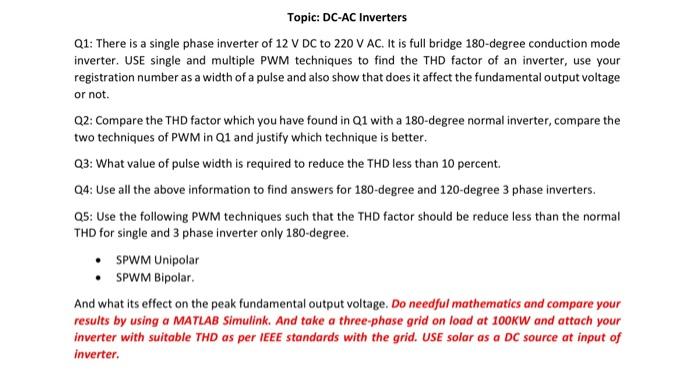
Topic: DC-AC Inverters Q1: There is a single phase inverter of 12 V DC to 220 V AC. It is full bridge 180-degree conduction mode inverter. USE single and multiple PWM techniques to find the THD factor of an inverter, use your registration number as a width of a pulse and also show that does it affect the fundamental output voltage or not. Q2: Compare the THD factor which you have found in Q1 with a 180-degree normal inverter, compare the two techniques of PWM in Q1 and justify which technique is better. Q3: What value of pulse width is required to reduce the THD less than 10 percent. Q4: Use all the above information to find answers for 180-degree and 120-degree 3 phase inverters. Q5: Use the following PWM techniques such that the THD factor should be reduce less than the normal THD for single and 3 phase inverter only 180-degree. SPWM Unipolar SPWM Bipolar. And what its effect on the peak fundamental output voltage. Do needful mathematics and compare your results by using a MATLAB Simulink. And take a three-phase grid on load at 100KW and attach your inverter with suitable THD as per IEEE standards with the grid. USE solar as a DC source at input of inverter.