Page 1 of 1
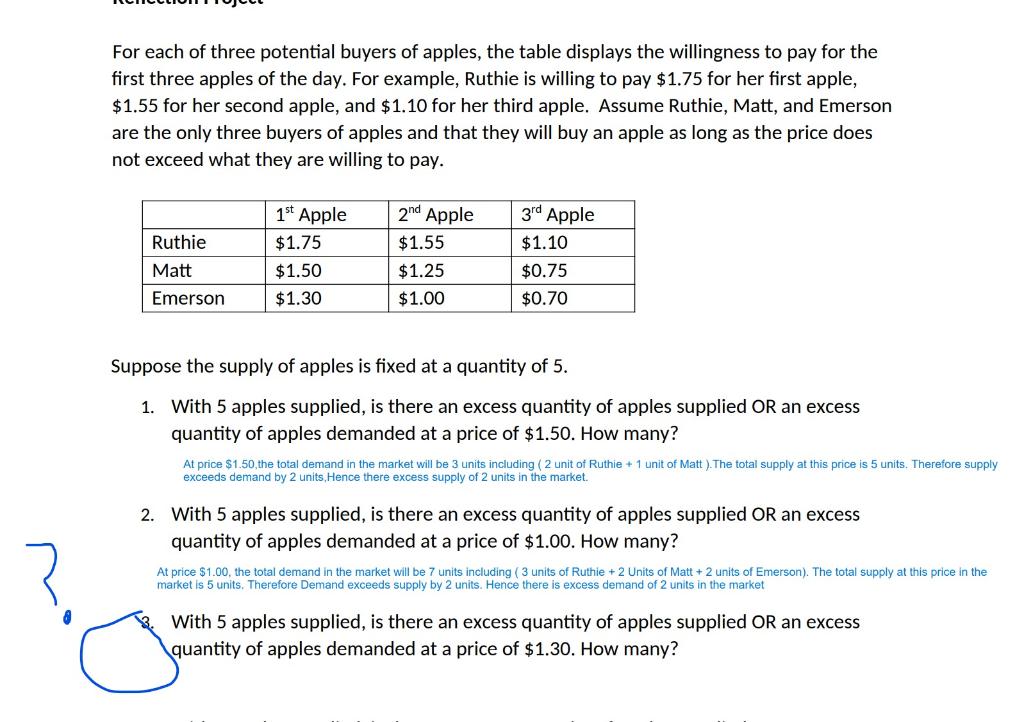
For each of three potential buyers of apples, the table displays the willingness to pay for the first three apples of th
Posted: Thu May 05, 2022 7:05 am
by answerhappygod
- For Each Of Three Potential Buyers Of Apples The Table Displays The Willingness To Pay For The First Three Apples Of Th 1 (108.32 KiB) Viewed 40 times
For each of three potential buyers of apples, the table displays the willingness to pay for the first three apples of the day. For example, Ruthie is willing to pay $1.75 for her first apple, $1.55 for her second apple, and $1.10 for her third apple. Assume Ruthie, Matt, and Emerson are the only three buyers of apples and that they will buy an apple as long as the price does not exceed what they are willing to pay. 1st Apple 2nd Apple 3rd Apple Ruthie $1.75 $1.55 $1.10 Matt $1.50 $1.25 $0.75 Emerson $1.30 $1.00 $0.70 Suppose the supply of apples is fixed at a quantity of 5. 1. With 5 apples supplied, is there an excess quantity of apples supplied OR an excess quantity of apples demanded at a price of $1.50. How many? At price $1.50, the total demand in the market will be 3 units including (2 unit of Ruthie + 1 unit of Matt). The total supply at this price is 5 units. Therefore supply exceeds demand by 2 units, Hence there excess supply of 2 units in the market. 2. With 5 apples supplied, is there an excess quantity of apples supplied OR an excess quantity of apples demanded at a price of $1.00. How many? At price $1.00, the total demand in the market will be 7 units including (3 units of Ruthie + 2 Units of Matt + 2 units of Emerson). The total supply at this price in the market is 5 units. Therefore Demand exceeds supply by 2 units. Hence there is excess demand of 2 units in the market With 5 apples supplied, is there an excess quantity of apples supplied OR an excess quantity of apples demanded at a price of $1.30. How many?