Page 1 of 1
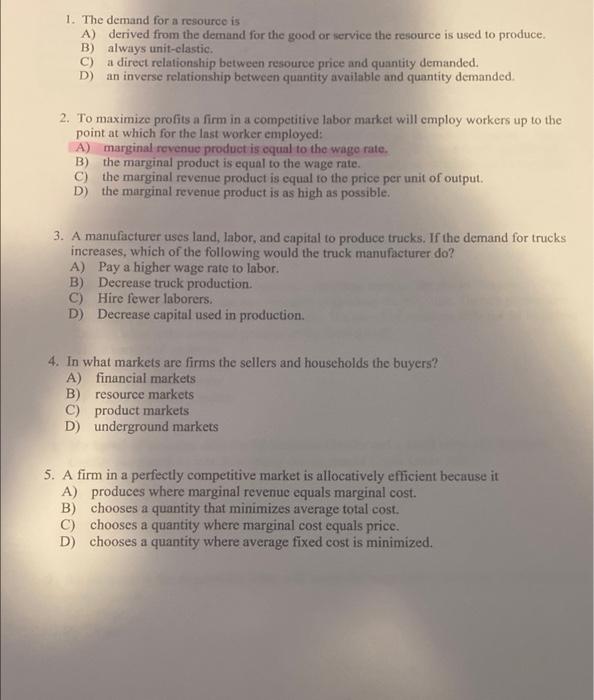
1. The demand for a resource is A) derived from the demand for the good or service the resource is used to produce. B) a
Posted: Thu May 05, 2022 6:30 am
by answerhappygod
- 1 The Demand For A Resource Is A Derived From The Demand For The Good Or Service The Resource Is Used To Produce B A 1 (40.79 KiB) Viewed 43 times
- 1 The Demand For A Resource Is A Derived From The Demand For The Good Or Service The Resource Is Used To Produce B A 2 (19.91 KiB) Viewed 43 times
1. The demand for a resource is A) derived from the demand for the good or service the resource is used to produce. B) always unit-clastic. C) a direct relationship between resource price and quantity demanded. D) an inverse relationship between quantity available and quantity demanded. 2. To maximize profits a firm in a competitive labor market will employ workers up to the point at which for the last worker employed: A) marginal revenue product is equal to the wage rate. B) the marginal product is equal to the wage rate. C) the marginal revenue product is equal to the price per unit of output. D) the marginal revenue product is as high as possible. 3. A manufacturer uses land, labor, and capital to produce trucks. If the demand for trucks increases, which of the following would the truck manufacturer do? A) Pay a higher wage rate to labor. B) Decrease truck production. C) Hire fewer laborers. D) Decrease capital used in production. 4. In what markets are firms the sellers and households the buyers? A) financial markets B) resource markets C) product markets D) underground markets 5. A firm in a perfectly competitive market is allocatively efficient because it A) produces where marginal revenue equals marginal cost. B) chooses a quantity that minimizes average total cost. C) chooses a quantity where marginal cost equals price. chooses a quantity where average fixed cost is minimized. D)
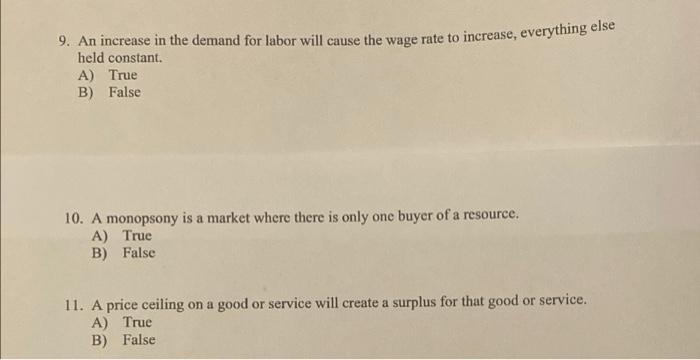
9. An increase in the demand for labor will cause the wage rate to increase, everything else held constant. A) True B) False 10. A monopsony is a market where there is only one buyer of a resource. A) True B) False 11. A price ceiling on a good or service will create a surplus for that good or service. A) True B) False