Page 1 of 1
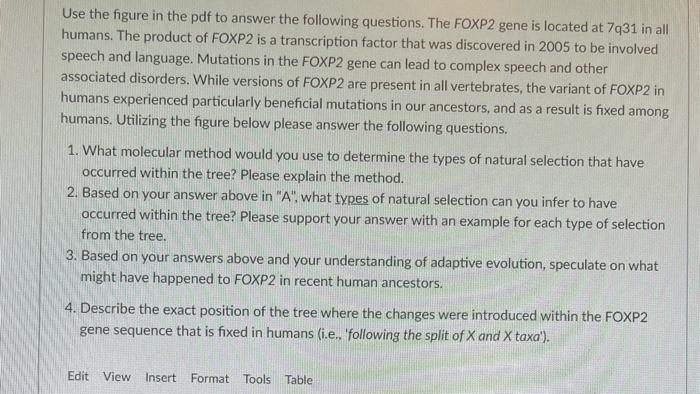
Use the figure in the pdf to answer the following questions. The FOXP2 gene is located at 7q31 in all humans. The produc
Posted: Fri Apr 29, 2022 12:10 pm
by answerhappygod
- Use The Figure In The Pdf To Answer The Following Questions The Foxp2 Gene Is Located At 7q31 In All Humans The Produc 1 (62.04 KiB) Viewed 29 times
- Use The Figure In The Pdf To Answer The Following Questions The Foxp2 Gene Is Located At 7q31 In All Humans The Produc 2 (49.22 KiB) Viewed 29 times
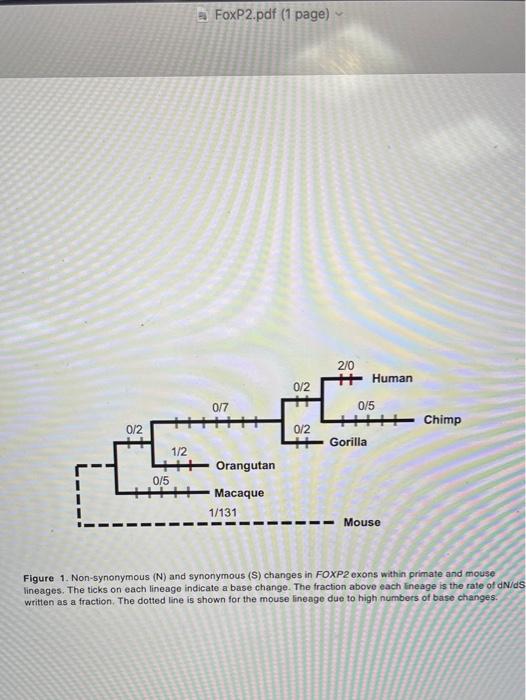
Use the figure in the pdf to answer the following questions. The FOXP2 gene is located at 7q31 in all humans. The product of FOXP2 is a transcription factor that was discovered in 2005 to be involved speech and language. Mutations in the FOXP2 gene can lead to complex speech and other associated disorders. While versions of FOXP2 are present in all vertebrates, the variant of FOXP2 in humans experienced particularly beneficial mutations in our ancestors, and as a result is fixed among humans. Utilizing the figure below please answer the following questions. 1. What molecular method would you use to determine the types of natural selection that have occurred within the tree? Please explain the method. 2. Based on your answer above in "A", what types of natural selection can you infer to have occurred within the tree? Please support your answer with an example for each type of selection from the tree. 3. Based on your answers above and your understanding of adaptive evolution, speculate on what might have happened to FOXP2 in recent human ancestors. 4. Describe the exact position of the tree where the changes were introduced within the FOXP2 gene sequence that is fixed in humans (i.e. 'following the split of X and X taxa'). Edit View Insert Format Tools Table
FoxP2.pdf (1 page) 2/0 ++ Human 0/2 0/7 0/5 ++ +++++ Chimp 0/2 0/2 1/2 ++ Gorilla +++ Orangutan 0/5 ++ ++ Macaque 1/131 Mouse , Figure 1. Non-synonymous (N) and synonymous (S) changes in FOXP2 exons within primate and mouse lineages. The ticks on each lineage indicate a base change. The fraction above each lineage is the rate of dN/dS written as a fraction. The dotted line is shown for the mouse lineage due to high numbers of base changes.